
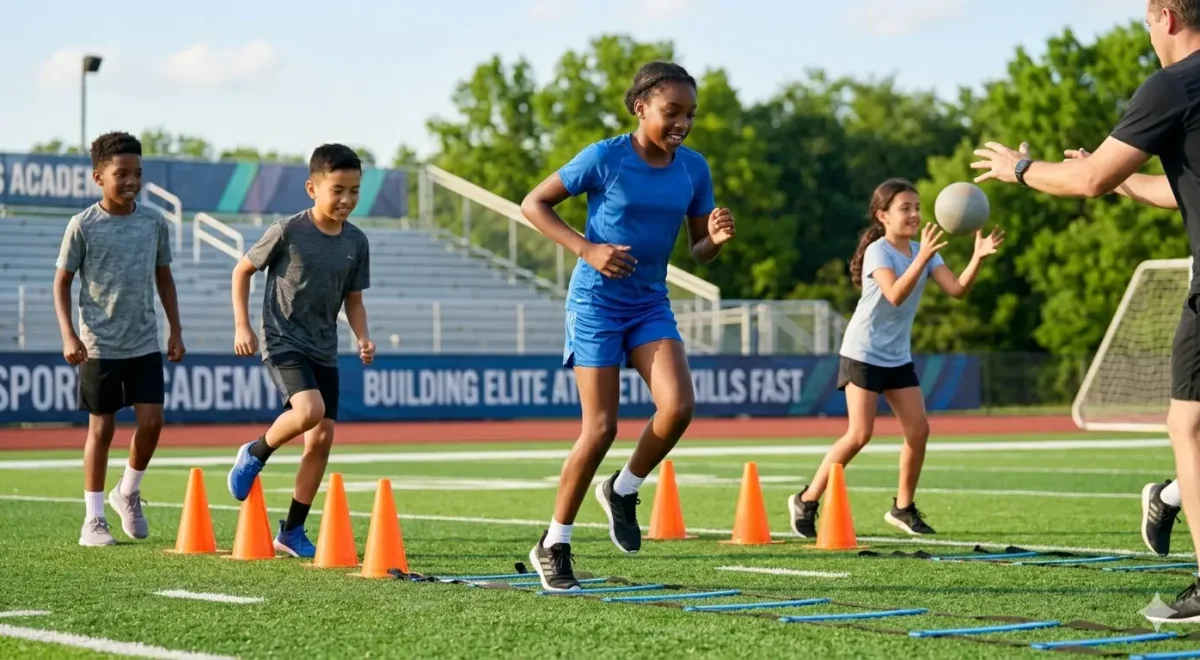
The Ultimate Guide to Youth Sports Training: Build Elite Athletic Skills Fast When it comes to developing young athletes, pushing them into adult-style, high-intensity workouts too early is a recipe for burnout and injury. Developing children requires a foundational approach that balances physical coordination, mental resilience, and pure enjoyment of the game.
Youth sports training, build athletic skills
Whether you are a parent, coach, or program coordinator, this article provides the ultimate guide to youth sports training: build elite athletic skills fast while keeping long-term health and growth at the forefront.
Phase 1: Prioritize Physical Literacy (Ages 6–9)
Before a child can master sport-specific strategies like soccer tactics or basketball plays, they must first master their own body mechanics. Early specialization can stunt overall athletic development.
- Focus on fundamental movements: Training at this stage should emphasize running, jumping, catching, throwing, and balancing. Think of these as the biological building blocks for all sports.
- Keep it play-based: Structured, rigid drills can ruin a child’s natural enthusiasm. Utilize gamified agility courses and tag games to develop reflexes, spatial awareness, and speed naturally.
Phase 2: The “Window of Accelerated Adaptation” (Ages 10–13)
This is the golden age for skill acquisition. A child’s nervous system is highly adaptable during these years, meaning they can map out new motor skills faster than at any other point in their lives.
- Introduce sport-specific mechanics: This is the ideal time to fine-tune high-level technical skills, such as precise footwork, clean batting swings, or efficient swimming strokes.
- Introduce light structural resistance: Avoid heavy weightlifting. Instead, introduce bodyweight exercises like push-ups, planks, and squats to build joint stability and core strength safely.
Phase 3: Advanced Conditioning and Strength (Ages 14+)
Once athletes hit high school, their bodies are structurally ready to handle more rigorous conditioning, strength training, and tactical workloads.
- Incorporate progressive resistance training: Introduce supervised weight training using dumbbells, medicine balls, and resistance bands. Focus on explosive movements to boost power and sprint speed.
- Train the aerobic and anaerobic systems: Implement sport-specific conditioning intervals (like shuttle runs for basketball or long-distance pacing for soccer) to build elite endurance.
Phase 4: Prioritize Active Recovery and Injury Prevention
Building elite skills isn’t just about what happens on the field; it’s about how the body recovers off the field. Overuse injuries are entirely preventable with the right protocol.
- Enforce the 80/20 rest rule: Ensure young athletes have at least one to two full days of rest per week. They should also take at least two months off per year from their primary sport to prevent mental burnout.
- Optimize nutrition and sleep: Growing bodies need clean fuel and deep sleep to repair muscle tissue. Prioritize whole foods, lean proteins, and a strict 8 to 9 hours of sleep each night.
The Bottom Line
Developing a young athlete is a marathon, not a sprint. Rushing the process leads to physical fatigue and dropped participation rates. By following a structured, age-appropriate framework, you give young players the tools to excel. Use the ultimate guide to youth sports training: build elite athletic skills fast as your blueprint to build a healthier, faster, and more confident athlete this season.
visit this website riitaaj.com to see more about ……..