
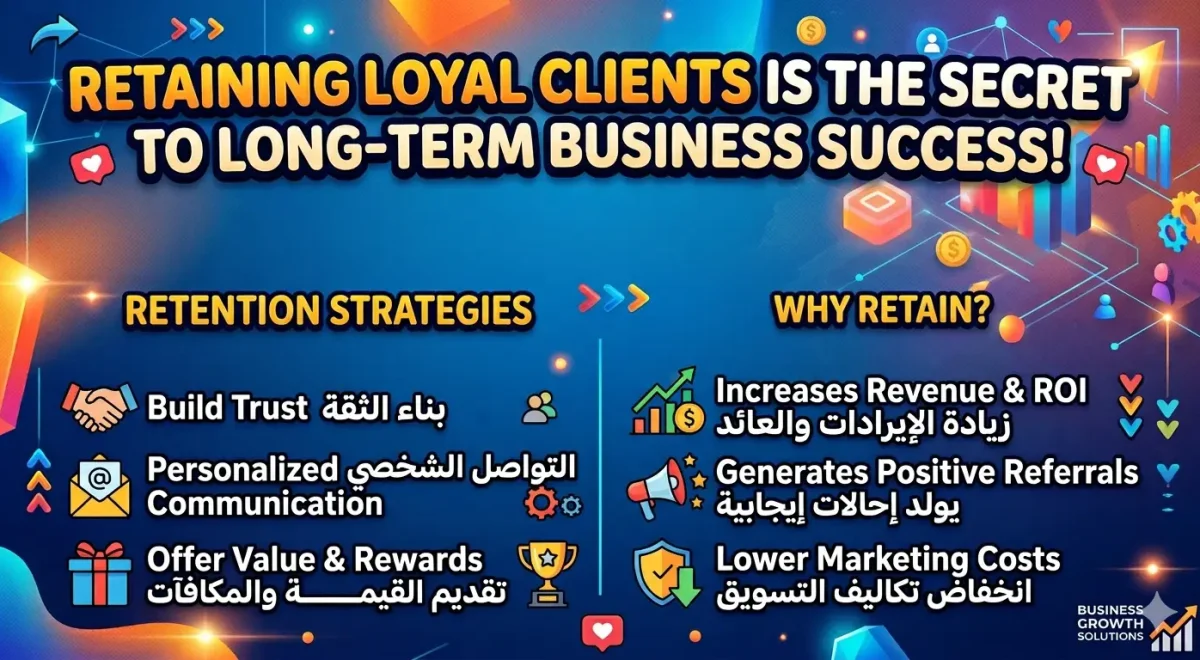
The Secret to Retaining Loyal Clients
Customer Relationship Management (CRM): The Secret to Retaining Loyal Clients : In the modern business landscape, acquiring a new customer can cost five to twenty-five times more than retaining an existing one. While many companies focus their energy on aggressive top-of-funnel marketing, the most successful brands understand that sustainable growth is built on the foundation of repeat business. The bridge between a one-time transaction and a lifelong partnership is a robust strategy for managing interactions.
If you want to move beyond spreadsheets and manual tracking to build a scalable, customer-centric organization, this guide explores customer relationship management (CRM): the secret to retaining loyal clients.
What is CRM and Why Does It Matter?
At its core, a CRM system is a centralized platform that stores every touchpoint a customer has with your brand from their first website visit and email inquiry to their purchase history and support tickets. By organizing this data in one place, your team gains a 360-degree view of the customer journey. This visibility allows you to treat every client like they are your only client, ensuring that no lead falls through the cracks and no loyal customer feels ignored.
1. Personalization at Scale
The primary reason customers leave a brand is a perceived sense of indifference. A CRM allows you to combat this by personalizing interactions based on real data. Instead of sending generic blast emails, you can segment your audience based on their specific interests, past purchases, or geographic location. When a customer receives a recommendation that actually fits their needs, their trust in your brand increases, which is a core component of customer relationship management (CRM): the secret to retaining loyal clients.
2. Proactive Customer Support
Nothing kills loyalty faster than a slow or uninformed support experience. With a CRM, when a customer calls or chats for help, the agent immediately sees their full history. There is no need for the customer to repeat their problem to three different people. Furthermore, advanced systems can alert your team to “at-risk” customers those who haven’t engaged in a while allowing you to reach out proactively with a check-in or a special offer before they decide to churn.
3. Streamlining the Sales Pipeline
For sales teams, a CRM acts as a roadmap. It automates follow-up reminders and tracks where each prospect is in the buying cycle. By reducing the administrative burden on your staff, they can spend more time building genuine relationships. This efficiency ensures a smooth transition from a “prospect” to a “client,” setting the stage for long-term retention from day one.
4. Leveraging Data for Continuous Improvement
A CRM does more than just store names and numbers; it provides deep analytical insights. By reviewing retention patterns, you can identify which products have the highest satisfaction rates and which stages of your sales process cause the most friction. This data-driven approach allows you to make strategic adjustments that directly improve the customer experience and, consequently, your bottom line.
5. Centralized Communication and Team Alignment
In many businesses, the marketing team, sales team, and support team operate in silos. This leads to inconsistent messaging that confuses the customer. A CRM serves as the “single source of truth” for the entire company. Whether a client speaks to an account manager or a billing specialist, the experience remains seamless and professional. This internal alignment is vital for maintaining the brand integrity required to keep clients coming back.
The Bottom Line
Retaining customers is not about luck; it is about the deliberate management of every interaction. By implementing a system that prioritizes the needs and history of your audience, you transform your business from a transactional storefront into a trusted partner. Embracing customer relationship management (CRM): the secret to retaining loyal clients ensures that your business grows not just by finding new people, but by keeping the ones you already have happy, heard, and engaged.
One Response
Wow so cute